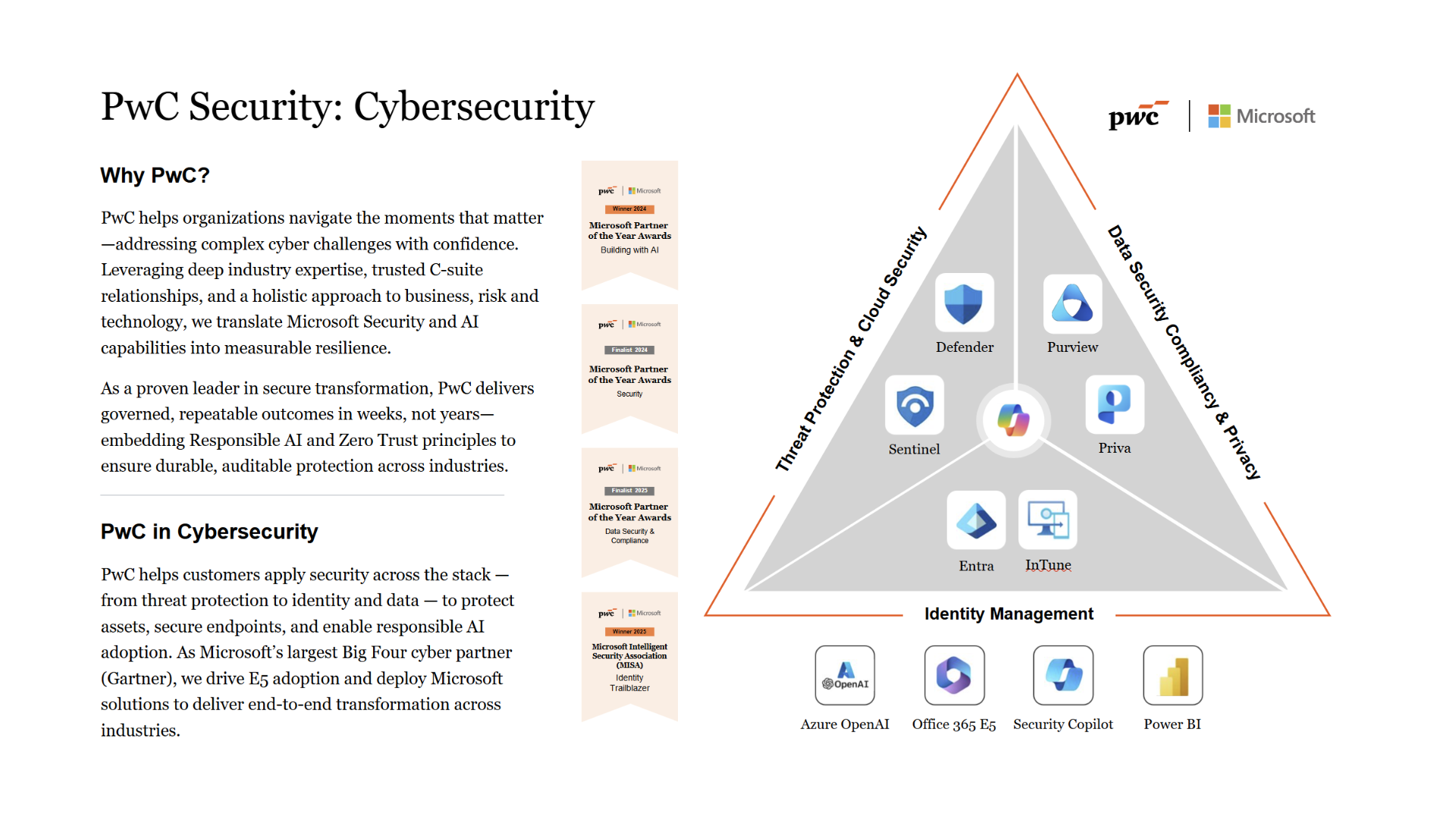
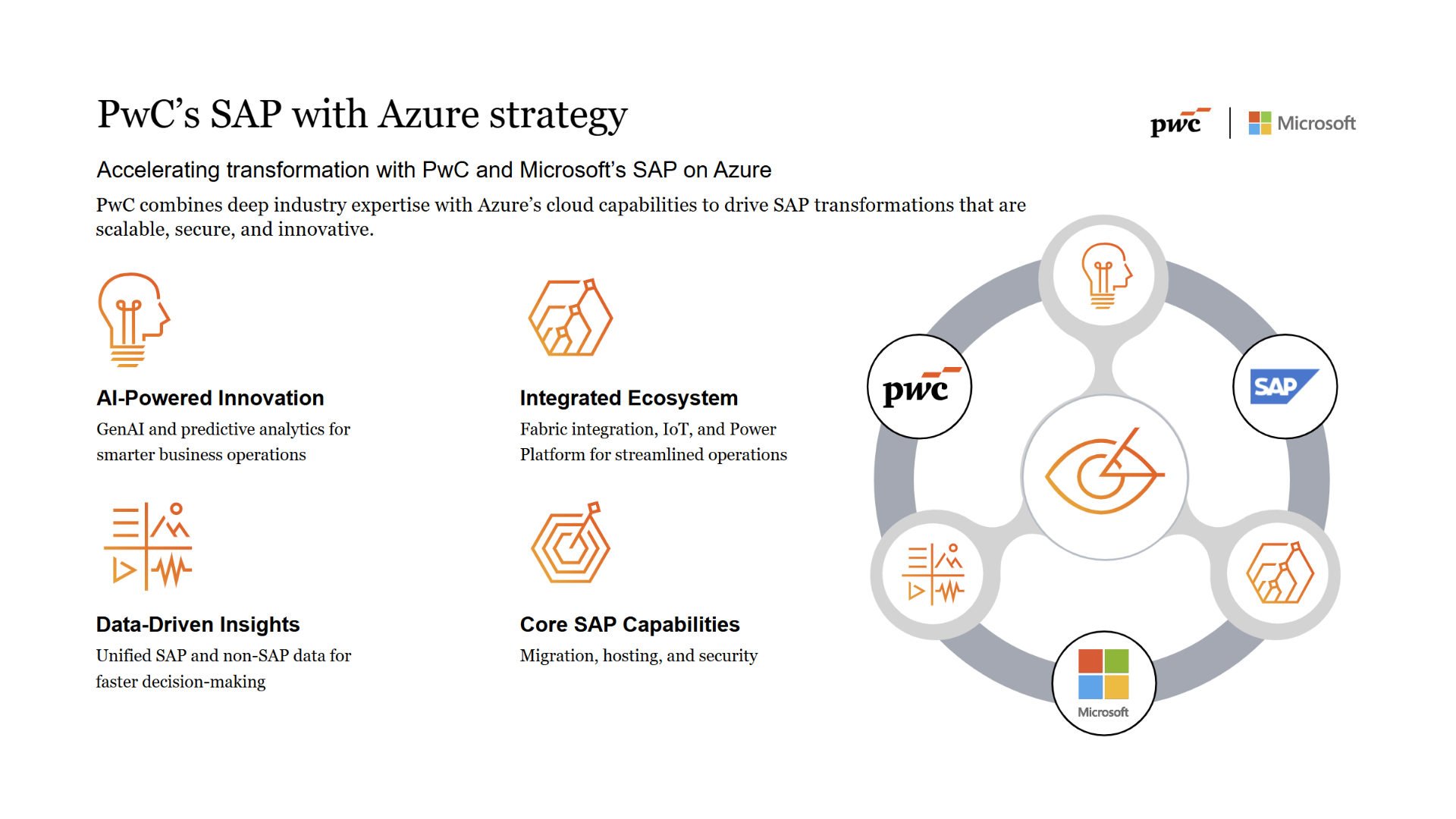
I worked with Transcends, an agency supporting the PwC–Microsoft Alliance, to design and execute a cohesive go-to-market system across PwC’s Microsoft offerings during a period of rapid change driven by AI, cloud adoption, and platform expansion.
The work supported PwC’s alliance efforts in the U.S. and globally, shaping how PwC communicates its Microsoft value to clients, Microsoft leadership, and internal teams.
PwC’s Microsoft Alliance operates at global scale, with deeply technical work spread across regions, platforms, and practices. As AI emerged and offerings expanded, sellers and leaders needed clearer ways to explain what PwC actually does — and why it matters.
This was not a branding exercise. It was an operational clarity problem.
PwC had no unified go-to-market system.
Stories about client impact and technical capability were fragmented, overly technical, and difficult to reuse. Stakeholders struggled to find the right materials to tell a coherent story — especially at the executive level.
Failure would have meant continued fragmentation and missed opportunities with Microsoft leadership.
This work had to speak to three distinct audiences, each with different needs:
Each go-to-market motion needed to feel tailored without becoming disconnected.
The central strategy was to treat go-to-market materials as a system, not a collection of one-off decks. Create a modular go-to-market system that could scale across platforms, regions, and audiences — without losing clarity.
I was strategically involved in shaping what content belonged in each go-to-market motion, with a focus on PwC and Microsoft sellers.
My role centered on:
My value was not just execution, it was making complexity usable.
To create clarity, we worked directly with stakeholders, reviewed transcripts and technical documentation, and identified the signal within dense material.
AI tools ( including Microsoft Copilot and a custom award-assessor GPT) were used to distill information, structure insights, and accelerate synthesis. Human judgment guided narrative framing, hierarchy, and design.
Deliverables included full presentation decks, visual frameworks, and supporting materials aligned to PwC’s platforms.
AI was used as a synthesis and thinking partner — not a replacement for strategy or decision-making.
It supported early structuring and distillation. Final narrative, design, and judgment remained human-led.
This work established a level of go-to-market cohesion PwC previously lacked.
The same narratives and frameworks later informed PwC’s Partner of the Year submissions. In 2025, PwC won nine Microsoft Partner of the Year awards, reinforcing PwC’s position as Microsoft’s premier partner.
This project reinforced that clarity at enterprise scale takes iteration.
If I were doing this today, I would standardize more of the process and introduce AI earlier to identify patterns across motions. This work reflects how I approach complexity: thoughtfully, strategically, and with respect for the people using the systems.
If you’re navigating complexity across audiences — and need your story to hold up at the executive level — I help teams design systems that make clarity scalable.
Want to see work related to this? Check out how we executed Partner of the Year Submissions for PwC.