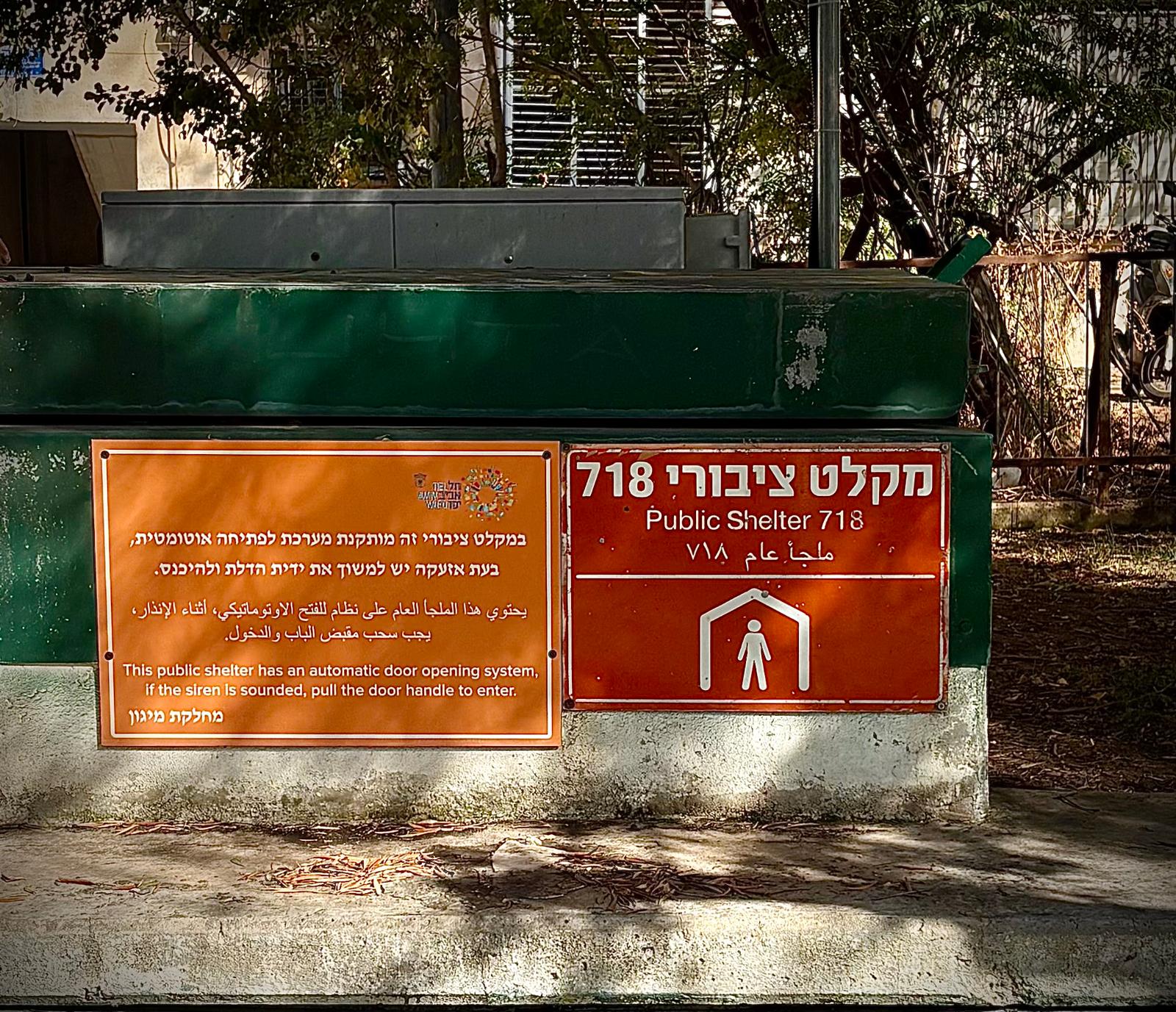
The closest public shelter to my house is number 718. In the neighborhood WhatsApp group, it’s considered a kind of gold standard – it’s underground, with bathrooms, potable water, even a fan that sometimes works.
For about a month, we lived inside what felt like the Russian dolls of wars. One war nestled within another. When everything happened with Iran, the sense of danger that had hovered in the background burst out into the open with a lightning crack. Everything felt loud and bright – vibrating and intense.
I didn’t write much during that time. When friends in the States asked how I was doing, I’d say it was hard, but we were fine. The truth is, we weren’t. I just didn’t have the language for it then.
Since the hostages came home, I’ve been writing every day. It’s as if the return of those faces allowed the rest of us to feel again – the weight of witnessing a war in real time, of escaping and returning only to find another conflict waiting. One we couldn’t leave.
The hostage posters are gone now. The only thing left are the sunspots on walls where the posters hung – empty squares that feel clean, medicinal. I can breathe again. I can write. I can remember.
In June, during the Iran war, my partner and I would take short walks around the block before nightfall, before the sirens started. We’d hold hands, taking deep breaths, talking through what we’d bring to the shelter that night. Once, trying to lighten the mood, he said, “Well, if it’s time, it’s our time.”
I turned to him. “I’m not ready to die yet,” I said. “I really don’t want this to be the end.”
At the time, I felt only anxiety—a steady pulse under the skin. Now I can feel the sadness beneath it: the grief for what was nearly lost, and for the people we became in order to survive.
We are not okay. But we are getting there.